 Ohne Anstehen buchbar
 Die beste Zeit für einen Besuch im Tal der Tempel von Agrigent
Ein monatlicher Concierge-Ratgeber zu Wetter, Licht, Besucherandrang, Festen und den fotografischen Sternstunden entlang der Via Sacra.
Das Tal der Tempel erstreckt sich auf einem exponierten Kalksteinrücken mit Blick auf das Mittelmeer im Süden Siziliens, und das Erlebnis wandelt sich mit den Jahreszeiten auf dramatische Weise. Die kurze Antwort, nach der die meisten Besucher suchen, lautet: Die schönsten Monate, um die Tempel zu Fuß zu erkunden, sind April, Mai, Ende September und Oktober, wenn die Tagestemperaturen zwischen angenehmen 18 °C und 26 °C liegen, das Licht lang und golden ist und der Höhenrücken noch nicht von der Sommersonne aufgeheizt wird. Von Februar bis März kommt das Schauspiel der Mandelblüte in den Gärten der Kolymbethra und das berühmte Fest Sagra del Mandorlo in Fiore hinzu. Juli und August bleiben die überlaufensten und auch körperlich anstrengendsten Monate, mit Mittagstemperaturen, die auf dem Stein und bei fast völliger Schattenfreiheit regelmäßig über 35 °C steigen.
Frühling (März bis Mai): die bevorzugte Reisezeit des Concierge
Der Frühling ist die Jahreszeit, die die meisten erfahrenen Reisenden und Archäologen für einen Besuch Agrigents empfehlen. Ab Mitte März haben die Mandelbäume, die die unteren Terrassen des Parks säumen, ihre Blüte meist beendet, doch die Wildblumen entlang der Via Sacra beginnen gerade erst. Die Tageshöchsttemperaturen steigen stetig von etwa 16 °C Anfang März auf 24 °C Ende Mai, und die langen Abende tauchen die Tempel ab etwa 17:00 Uhr in weiches, streifendes Licht. Das mediterrane Licht in dieser Breite ist dem honigfarbenen dorischen Stein bekanntermaßen wohlgesonnen. Sie können bequem drei bis vier Stunden auf dem Höhenrücken wandern, vom Juno-Tempel im Osten bis zum Tempel von Kastor und Pollux im Westen, ohne zu überhitzen, selbst wenn Sie sich für die Mittagszeit entscheiden.
Im Frühling fühlt sich der Park auch in botanischer Hinsicht am lebendigsten an. Der Garten der Kolymbethra, ein antiker bewässerter Obstgarten, der in ein kleines Tal unterhalb der westlichen Tempel eingebettet ist, füllt sich im April und Mai mit Zitrusblüten, und der Duft von Zagara (Orangenblüte) weht die Hänge hinauf. Greifvögel ziehen am Himmel vorüber. An Wochentagen kommen zwar Schulgruppen aus Sizilien und vom italienischen Festland, doch der große internationale Besucheransturm hat noch nicht wirklich begonnen. Wir empfehlen einen Eintritt am Vormittag durch die Porta V, einen Spaziergang entlang des Höhenrückens nach Westen und ein spätes Mittagessen zurück im historischen Zentrum von Agrigent.
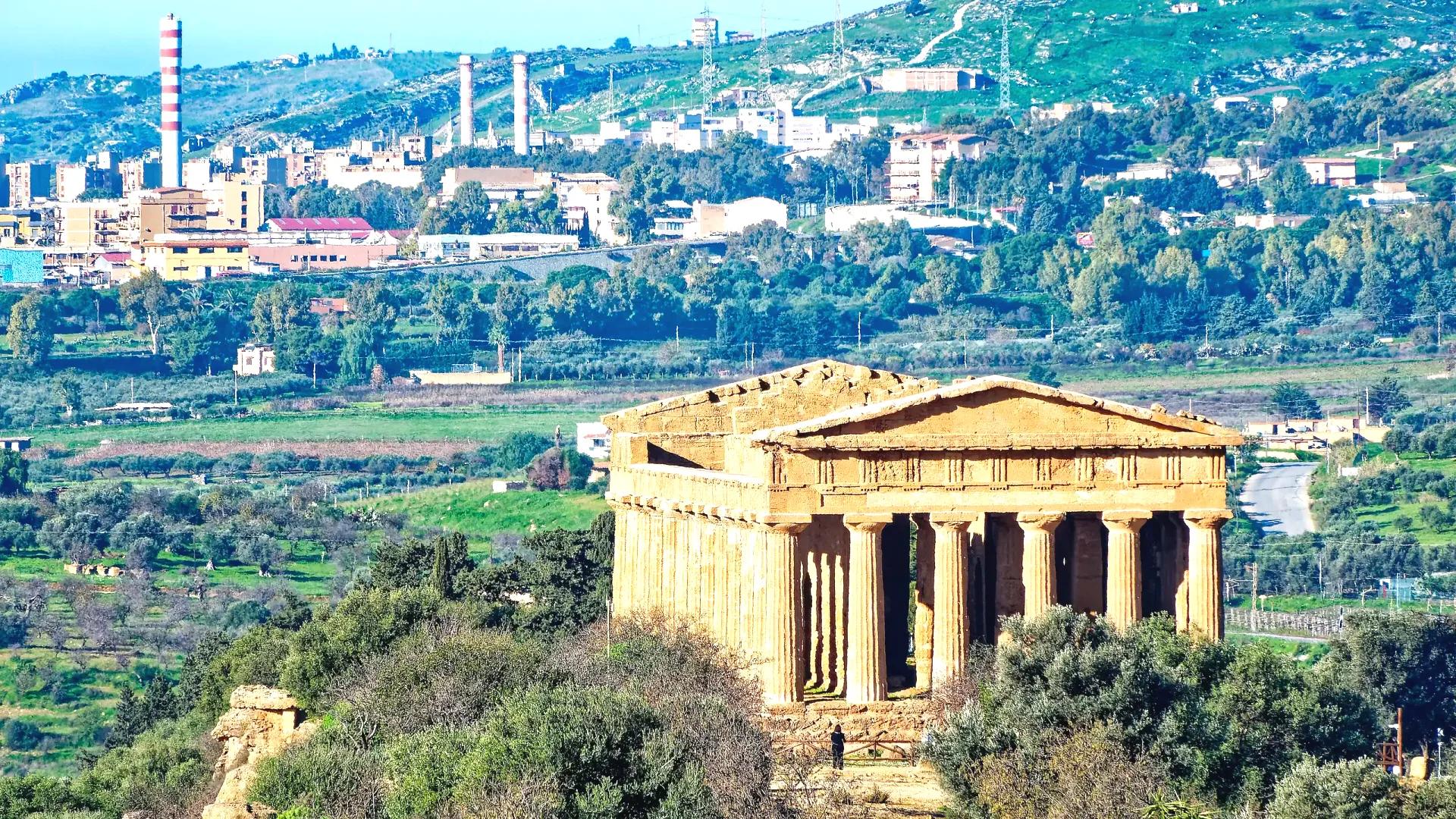
Wenn Sie Ende Mai reisen, packen Sie wie für eine griechische Insel in der Nebensaison: eine leichte Langarm-Bluse für den Morgen, einen breitkrempigen Sonnenhut und eine wiederbefüllbare Wasserflasche. Die Trinkbrunnen entlang der Heiligen Straße sind zuverlässig, aber weit auseinander, und das Café Casa Barbadoro auf halber Strecke durch den Park ist ein nützlicher Zwischenstopp. Entscheidend ist, dass der Frühling die beste Zeit für klare Fotos des Concordia-Tempels ist: tiefblauer Himmel, kein Dunst, und der honigfarbene Stein kommt sowohl auf Film als auch auf dem Handybildschirm perfekt zur Geltung.
Sommer (Juni bis August): Hitzemanagement ist nicht verhandelbar
Der Sommer im Tal der Tempel ist eine anspruchsvolle Angelegenheit. Die Anlage schließt nicht, die Abende sind lang, und die berühmten nächtlichen Öffnungen des Parks (wenn die Tempel vor dunklem Himmel beleuchtet sind) konzentrieren sich auf Juli und August. Doch die Mittagszeit auf dem Kamm ist wirklich extrem. Die sizilianische Sonne erreicht hier fast senkrecht ihren Zenit, der Kalkstein reflektiert die Hitze, und der einzige durchgehende Schatten entlang der Heiligen Straße ist ein Olivenhain nahe dem Herkules-Tempel. Die Tageshöchsttemperaturen im Juli und August übersteigen regelmäßig 35°C, und historische Aufzeichnungen zeigen an mehreren Tagen pro Sommer Temperaturen über 40°C.
Wenn Sie zwischen Mitte Juni und Anfang September reisen, planen Sie Ihren Tag um die Hitze herum. Der Park öffnet normalerweise um 08:30 Uhr, und die ersten neunzig Minuten sind das einzige Zeitfenster, in dem Sie den gesamten Kamm bequem in der direkten Sonne begehen können. Viele Concierge-Kunden bevorzugen stattdessen den späten Nachmittag, beginnend gegen 17:00 Uhr, mit letztem Einlass meist um 18:00 oder 19:00 Uhr im Hochsommer, und gehen die Tempel in der langen mediterranen Dämmerung ab. Der Concordia-Tempel in der späten goldenen Stunde, von der Ostseite fotografiert, ist einer der stillsten filmreifen Anblicke im Mittelmeerraum.
Gesundheitliche Risiken durch Hitze sind nicht zu unterschätzen. Mehrere italienische Regierungswarnungen nennen jeden Sommer speziell sizilianische archäologische Stätten als Risikozonen für Touristen, und Notrufeinsätze im Tal der Tempel während Hitzewellen sind Routine. Wenn Sie mit Kindern unter zehn Jahren, Personen über siebzig oder jemandem mit Herz-Kreislauf-Erkrankungen reisen, planen Sie Ihren Tag um einen frühen Morgentermin, tragen Sie mindestens zwei Liter Wasser pro Person und nutzen Sie den kostenpflichtigen Shuttle-Service zwischen Porta V und Porta Giunone, anstatt die gesamten 1,3 km des Kamms auf dem Rückweg zu Fuß zurückzulegen. Der Shuttle ist keine Schande; an einem 38°C-Tag ist er die richtige Entscheidung.
Herbst (September bis November): die geheime Saison für Fotografen
Der September ist nach unserer Concierge-Erfahrung der am meisten unterschätzte Monat im Tal der Tempel. Die Schulferien sind vorbei, die Reisebusse der Pauschalurlauber sind weniger geworden, aber das Meer ist noch warm genug zum Schwimmen an der Scala dei Turchi oder in San Leone, und das Licht hat die langschattige Qualität, für die Fotografen reisen. Die Temperaturen pendeln sich Mitte des Monats auf Mitte 20°C ein und fallen bis Ende Oktober auf angenehme 18°C–22°C. Der Concordia-Tempel von Südosten im Oktober, eine Stunde vor Sonnenuntergang, ist die Postkarte, die jeder will und die fast niemand in der Sommerschlange jemals wirklich bekommt.
Der Oktober und November bringen auch die ersten richtigen Regenfälle des sizilianischen Agrarkalenders, was bedeutet, dass der Staubschleier, der Sommerfotos manchmal trübt, sich lichtet. Die Ernte im Kolymbethra-Garten findet von Oktober bis November statt, die Zitrusfrüchte hängen schwer an den Bäumen, und die unteren Terrassen des Parks bekommen eine andere Art von Fülle. Viele der besonderen Abendveranstaltungen des Parks, archäologische Vorträge und kleine Konzerte konzentrieren sich auf Ende September und Anfang Oktober, wenn das Wetter zuverlässig ist, aber die Hochsaisonpreise nachgelassen haben.
Mitte November sind die Tage merklich kürzer, der Park schließt normalerweise um 17:00 Uhr, und eine packbare Regenjacke wird nützlich. Aber der Vorteil ist real: An einem klaren Novembermorgen können Sie am Juno-Tempel stehen, das Mittelmeer unter sich ausgebreitet, und eine fünfminütige Strecke haben, auf der sich im Wesentlichen niemand sonst in Ihrem Blickfeld befindet. Das ist eine Erfahrung, die man im August zu keinem Preis kaufen kann.
Winter (Dezember bis Februar) und die Mandelblüte
Der Winter im Tal der Tempel ist nach nordeuropäischen Maßstäben mild, aber kühler als Besucher erwarten. Die Tageshöchsttemperaturen liegen zwischen 12°C und 16°C, die Nächte fallen auf 6°C–9°C, und der berühmte Mittelmeerwind vom Sizilianischen Kanal kann exponierte Kämme rau wirken lassen. Die Niederschläge erreichen im Dezember und Januar ihren Höhepunkt, aber selten als langanhaltende Stürme; das typische Muster ist ein heftiger Schauer, gefolgt von klarem Himmel. Der Park schließt im Winter früher (normalerweise um 17:00 Uhr), und der letzte Einlass verschiebt sich entsprechend, sodass ein Eintritt um 09:30 Uhr und ein gemütlicher dreistündiger Besuch der übliche Rhythmus sind.
Das Hauptereignis im Winter ist die Mandelblüte. Die sizilianischen Mandeln rund um Agrigent blühen früher als fast überall sonst in Europa, typischerweise von Ende Januar bis zur dritten Februarwoche, je nach Jahr. Für ein etwa dreiwöchiges Fenster sind die unteren Terrassen des Archäologischen Parks, insbesondere um das Grab des Theron und den Bereich unterhalb des Concordia-Tempels, in blassrosa und weiße Blüten vor dem honigfarbenen Stein gekleidet. Es ist, ehrlich gesagt, eines der schönsten Dinge in Italien.
Die 78. Ausgabe der Sagra del Mandorlo in Fiore – des Mandelblütenfestes – findet vom 7. bis 15. März 2026 statt. Internationale Volkstanzgruppen ziehen von der Stadt zu den Tempeln, die Fackel der Freundschaft wird vor dem Tempel der Concordia entzündet, und am Abschlusstag gibt es eine Prozession sizilianischer Karren. Das Fest ist die belebteste Woche der Nebensaison in Agrigento; Hotels sind drei Monate im Voraus ausgebucht, und die Tempel selbst besichtigt man am besten am frühen Morgen, bevor der Festtagsandrang einsetzt.
Sonnenaufgang, Sonnenuntergang und letzte Einlasszeiten: das perfekte Licht einfangen
Das Tal der Tempel erstreckt sich von Ost nach West entlang eines niedrigen Höhenrückens, mit dem Juno-Tempel am östlichen Ende und dem Tempel von Kastor und Pollux im Westen. Diese Anordnung ist entscheidender, als die meisten Besucher ahnen. Bei Sonnenaufgang fängt die Ostfassade des Concordia-Tempels und des Juno-Tempels das erste Licht ein und lässt die Säulen plastisch hervortreten. Bei Sonnenuntergang sind dieselben Tempel vom mediterranen Himmel hinterleuchtet – ideal für Silhouettenfotografie. Der Tempel des Olympischen Zeus und die westlichen Tempel fotografiert man am besten am späten Nachmittag, wenn das sinkende Licht sie von Südwesten her anstrahlt.
Die Zeiten für den letzten Einlass variieren je nach Saison und sollten am Besuchstag stets noch einmal geprüft werden, doch das Grundmuster ist verlässlich. Im Sommer schließt der Ticketschalter in der Regel um 19:00 Uhr, der Park selbst bleibt bis 20:00 Uhr geöffnet, und die abendlichen Sonderöffnungen mit Nachtspaziergängen gehen oft bis 22:00 oder 23:00 Uhr. Im Winter schließt der Schalter gegen 16:00 Uhr und der Park um 17:00 Uhr. Frühling und Herbst liegen zwischen diesen Extremen. Die nächtlichen Öffnungen im Juli und August, wenn die Tempel angestrahlt sind und die Luft endlich abkühlt, sind eine völlig eigene Erfahrung und rechtfertigen die Planung eines ganzen Abends.
Unsere Concierge-Empfehlung für Erstbesucher ist klar: Betreten Sie den Park etwa neunzig Minuten vor Sonnenuntergang durch die Porta V (das östliche Tor), gehen Sie den Höhenrücken westwärts bis zum Tempel des Olympischen Zeus und planen Sie Ihre Rückkehr so, dass Sie zwanzig Minuten vor Sonnenuntergang wieder am Concordia-Tempel sind. Sie haben dann fünf große Tempel im besten Licht des Tages fotografiert und verlassen den Park durch dasselbe Tor, durch das Sie gekommen sind, während die Tempel hinter Ihnen golden aufleuchten. Es ist die wertvollste anderthalbe Stunde im südlichen Sizilien.
Häufig gestellte Fragen
Welcher Monat ist der absolut beste für einen Besuch des Tals der Tempel?
Ende April und die erste Maihälfte – mit einer perfekten Balance aus stabilem Wetter, langen Abenden, überschaubarem Besucheraufkommen und dem Ausklang der Wildblumensaison. Ende September ist eine sehr gute Alternative, besonders für Fotografen.
Kann man Agrigento im Juli oder August gefahrlos besuchen?
Ja, aber nur mit durchdachter Hitzeplanung. Betreten Sie das Gelände zur Öffnung (08:30 Uhr) oder am späten Nachmittag (ab 17:00 Uhr), führen Sie mindestens zwei Liter Wasser pro Person mit, tragen Sie einen breitkrempigen Sonnenhut und nutzen Sie den kostenpflichtigen Shuttle zwischen Porta V und Porta Giunone, anstatt den Höhenrücken in der Mittagssonne zweimal zu Fuß zurückzulegen. Meiden Sie im Hochsommer das Zeitfenster zwischen 12:00 und 16:00 Uhr.
Wann findet die Sagra del Mandorlo in Fiore 2026 statt?
Die 78. Ausgabe läuft vom 7. bis 15. März 2026. Es ist ein neuntägiges internationales Folklorefest, das in einer Prozession sizilianischer Karren von der Stadt ins Tal der Tempel gipfelt, begleitet vom Entzünden der Freundschaftsfackel vor dem Tempel der Concordia.
Kann man die Mandelblüte schon im Februar sehen?
Ja – die Mandelbäume rund um Agrigento blühen je nach Jahr typischerweise von Ende Januar bis in die dritte Februarwoche. Die dichteste Blüte zeigt sich unterhalb des Concordia-Tempels und rund um das Grabmal des Theron, oft noch vor dem offiziellen Fest im März.
Sind die Tempel nachts geöffnet?
Ja – im Juli und August gibt es spezielle Nachtöffnungen mit angestrahlten Tempeln, bei denen die Parkzeiten mitunter bis 22:00 oder 23:00 Uhr ausgedehnt werden. Die genauen Daten variieren von Jahr zu Jahr; wir bestätigen unseren Gästen den aktuellen Zeitplan zum Buchungszeitpunkt.
Regnet es im Winter je so stark, dass ein Besuch beeinträchtigt wird?
Selten. Dezember und Januar sind die feuchtesten Monate, doch das typische Muster sind kurze, kräftige Schauer, gefolgt von klarem Himmel. Die Via Sacra ist auf dem größten Teil ihrer Länge gepflastert oder mit Bohlenwegen versehen und bleibt bei leichtem Regen gut begehbar. Eine packbare Regenjacke ist von November bis Mitte März sinnvoll.
Welches ist die ungünstigste Zeit für einen Besuch im Tal der Tempel?
Die Mittagsstunden im Juli oder August – etwa von 12:00 bis 15:00 Uhr – ohne entsprechende Hitzeplanung. Der Höhenrücken bietet so gut wie keinen durchgehenden Schatten, der Kalkstein reflektiert die Hitze, und die Temperaturen überschreiten regelmäßig 35 °C. Die italienischen Hitzewarnungen heben bei Hitzewellen ausdrücklich exponierte archäologische Stätten auf Sizilien hervor.
Ist der Besucherandrang in der Nebensaison ein Problem?
Im Allgemeinen nein. April, Mai, September und Oktober bringen zwar stetig internationale Gäste, aber selten die dichten Warteschlangen, die man aus Juli und August kennt. Selbst in den Übergangsmonaten sind jedoch die ersten zwei Stunden nach Öffnung und die letzten zwei Stunden vor Schließung die ruhigste Zeit.
Lohnt sich ein Besuch des Tals der Tempel im Winter?
Unbedingt, und es ist die Jahreszeit, die die meisten lokalen Führer insgeheim bevorzugen. Das Licht ist außergewöhnlich, die Tempel sind nicht überlaufen, und das historische Zentrum von Agrigento zeigt sich von seiner authentischsten Seite – mit saisonaler sizilianischer Küche auf jeder Restaurantkarte.