 Skip-the-line available
 The Best Time to Visit the Valley of the Temples in Agrigento
A concierge month-by-month guide to weather, light, crowds, festivals and the photographer's hours along the Sacred Way.
The Valley of the Temples sits on an exposed limestone ridge overlooking the Mediterranean in southern Sicily, and the experience changes dramatically with the season. The short answer most visitors are searching for is this: the finest months to see the temples on foot are April, May, late September and October, when daytime temperatures sit between a comfortable 18°C and 26°C, the light is long and golden, and the ridge is not yet baked by the summer sun. February through March add the spectacle of almond blossom across the Kolymbethra gardens and the famous Sagra del Mandorlo in Fiore festival. July and August remain the most crowded months and also the most physically demanding, with midday temperatures regularly above 35°C on stone with almost no shade.
Spring (March to May): the concierge sweet spot
Spring is the season most seasoned travellers and most archaeologists recommend for visiting Agrigento. By mid-March the almond trees that ring the lower terraces of the park have usually finished flowering, but the wildflowers along the Sacred Way are just beginning. Daytime highs climb steadily from around 16°C in early March to 24°C by late May, and the long evenings mean the temples are bathed in soft, raking light from about 17:00 onwards. The Mediterranean light at this latitude is famously generous to honey-coloured Doric stone. You can comfortably spend three to four hours walking the ridge from the Temple of Juno at the east to the Temple of Castor and Pollux at the west without overheating, even if you choose a midday slot.
Spring is also when the park feels most alive in a botanical sense. The Kolymbethra garden, an ancient irrigated orchard tucked into a small valley below the western temples, fills with citrus blossom in April and May, and the scent of zagara (orange blossom) drifts up the slopes. Migrating raptors pass overhead. School groups from Sicily and the wider Italian mainland do appear on weekday mornings, but the international tourist surge has not yet started in earnest. We recommend a mid-morning entry through Porta V, a westward walk along the ridge, and a late lunch back in the historic centre of Agrigento.
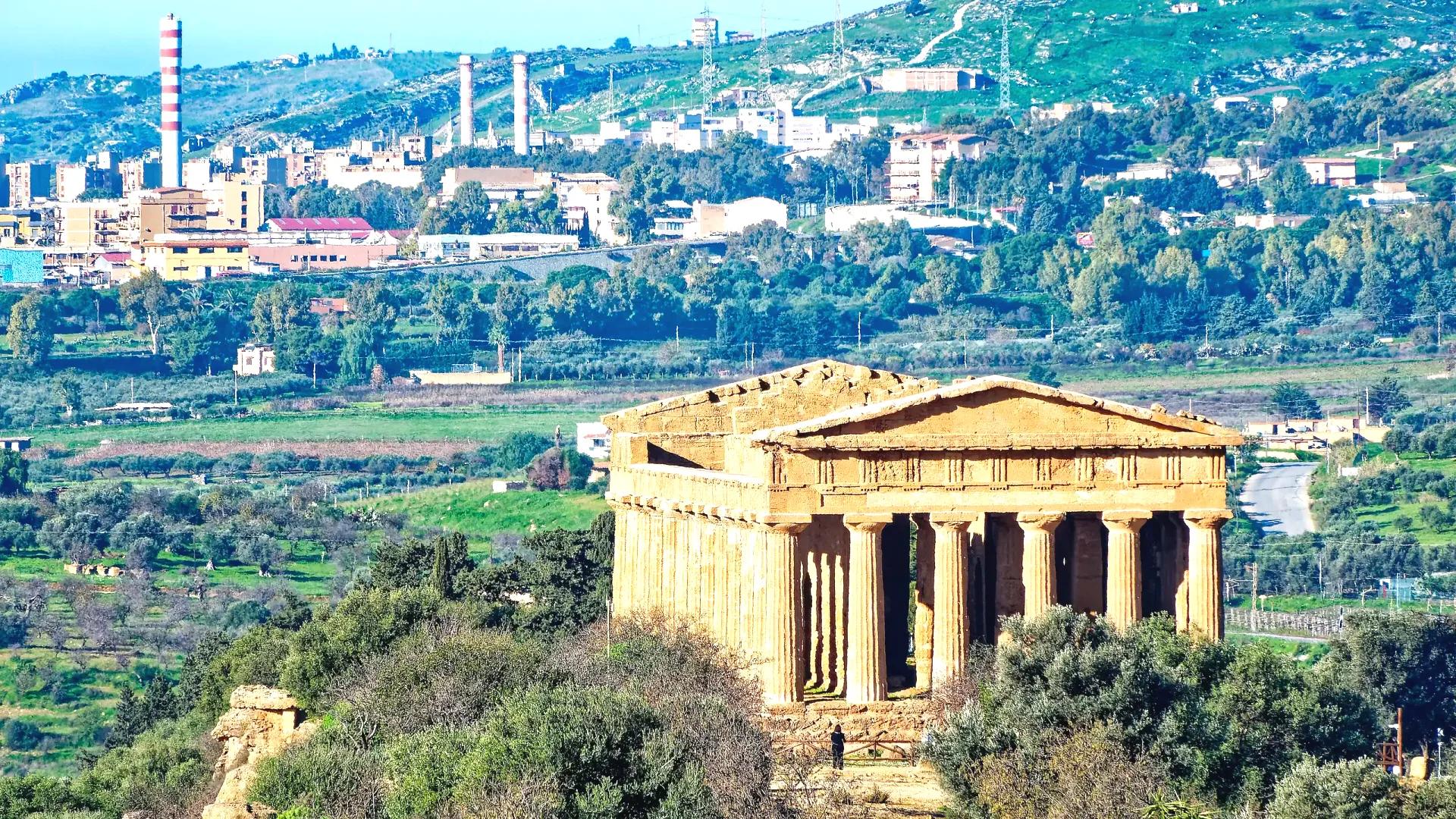
If you visit in late May, pack as you would for a Greek-island shoulder season: a light long sleeve for the morning, a wide-brimmed sun hat, and a refillable water bottle. The drinking fountains along the Sacred Way are reliable but spaced apart, and the cafe at Casa Barbadoro halfway through the park is a useful checkpoint. Crucially, spring is when the Temple of Concordia photographs most cleanly: deep blue sky, no haze, and the honey-coloured stone reads true on film and on a phone screen.
Summer (June to August): heat planning is non-negotiable
Summer at the Valley of the Temples is a complicated proposition. The site does not close, the evenings are long, and the famous night-time openings of the park (when the temples are illuminated against the dark sky) are concentrated in July and August. But midday on the ridge is genuinely punishing. The Sicilian sun reaches the zenith almost vertically here, the limestone reflects heat, and the only continuous shade along the Sacred Way is a stretch of olive grove near the Temple of Hercules. Daytime highs in July and August routinely exceed 35°C, and the historical record shows temperatures above 40°C several days per summer.
If you visit between mid-June and early September, plan your day around the heat. The park usually opens at 08:30, and the first ninety minutes are the only window where you can comfortably walk the full ridge in direct sun. Many concierge clients prefer the late-afternoon entry instead, beginning around 17:00 with last admission usually at 18:00 or 19:00 in high summer, and walking the temples in the long Mediterranean dusk. The Temple of Concordia in late golden hour, photographed from the eastern side, is one of the most quietly cinematic sights in the Mediterranean.
Heat-health is not a small matter. Several Italian-government advisories each summer specifically name Sicilian archaeological sites as risk zones for tourists, and emergency-services callouts to the Valley of the Temples during heat waves are routine. If you are travelling with children under ten, anyone over seventy, or anyone with a cardiovascular condition, build your day around an early-morning slot, carry at least two litres of water per person, and use the paid shuttle service between Porta V and Porta Giunone rather than walking the full 1.3 km of ridge on the return leg. There is no shame in the shuttle; on a 38°C day it is the right call.
Autumn (September to November): the photographer's secret season
September is, in our concierge experience, the single most underrated month at the Valley of the Temples. The school summer holidays have ended, the package-tour coaches have thinned out, but the sea is still warm enough to swim at Scala dei Turchi or San Leone, and the light has the long-shadow quality that photographers travel for. Temperatures settle into the mid-20s by mid-month, dropping to a pleasant 18°C–22°C by late October. The Temple of Concordia from the southeast in October, an hour before sunset, is the postcard everyone wants and almost no one in the summer queue ever actually gets.
October and November also bring the first proper rains of the Sicilian agricultural calendar, which means the dust haze that sometimes blurs summer photographs lifts. The Kolymbethra garden harvest happens through October and into November, the citrus is heavy on the trees, and the lower terraces of the park take on a different kind of richness. Many of the park's special evening events, archaeological talks and small-scale concerts cluster around late September and early October when the weather is reliable but the high-season pricing has eased.
By mid-November the days have shortened noticeably, the park typically closes by 17:00, and a packable rain shell becomes useful. But the upside is real: on a clear November morning, you can stand at the Temple of Juno with the Mediterranean spread out below and have a five-minute stretch where there is essentially no one else in your field of view. That is not an experience you can buy in August at any price.
Winter (December to February) and the almond blossom
Winter at the Valley of the Temples is mild by northern-European standards but cooler than visitors expect. Daytime highs hover between 12°C and 16°C, nights drop to 6°C–9°C, and the famous Mediterranean wind off the Sicilian Channel can make exposed ridges feel raw. Rainfall peaks in December and January, but rarely as long sustained storms; the typical pattern is a sharp shower followed by clear skies. The park closes earlier in winter (usually by 17:00) and last admission shifts forward correspondingly, so a 09:30 entry and a leisurely three-hour visit is the standard rhythm.
The headline winter event is the almond blossom. The Sicilian almonds around Agrigento flower earlier than almost anywhere else in Europe, typically from late January through to the third week of February depending on the year. For a roughly three-week window the lower terraces of the archaeological park, particularly around the Tomb of Theron and the area below the Temple of Concordia, are dressed in pale-pink and white blossom against the honey-coloured stone. It is, frankly, one of the most beautiful things in Italy.
The 78th edition of the Sagra del Mandorlo in Fiore — the Almond Blossom Festival — runs from 7 to 15 March 2026, with international folk-dance troupes parading from the city to the temples, the lighting of the friendship torch in front of the Temple of Concordia, and a closing-day procession of Sicilian carts. The festival is the busiest week of the Agrigento off-season, hotels fill three months in advance, and the temples themselves are best visited in the early morning before festival foot traffic builds.
Sunrise, sunset and last-entry timings: getting the light right
The Valley of the Temples runs east-to-west along a low ridge, with the Temple of Juno at the eastern end and the Temple of Castor and Pollux at the west. This geometry matters more than most visitors realise. At sunrise, the eastern face of the Temple of Concordia and the Temple of Juno catches the first light, throwing the columns into deep relief. At sunset, the same temples are backlit by a Mediterranean sky, ideal for silhouette photography. The Temple of Olympian Zeus and the western temples photograph best in late afternoon, with the falling sun lighting them from the south-west.
Last-entry timings vary by season and you should always confirm on the day of your visit, but the rough pattern is consistent. In summer the ticket office typically closes at 19:00 with the park itself open until 20:00 and special night-walk openings often running until 22:00 or 23:00. In winter the ticket office closes around 16:00 with the park closing at 17:00. Spring and autumn fall between these extremes. The night openings in July and August, when the temples are floodlit and the air is finally cool, are a separate kind of experience entirely and are worth planning a full evening around.
Our concierge recommendation for first-time visitors is straightforward: enter at Porta V (the eastern gate) about ninety minutes before sunset, walk the ridge westward to the Temple of Olympian Zeus, and time your turn-around so you are back at the Temple of Concordia twenty minutes before the sun drops. You will have photographed five major temples in the best light of the day, and you will exit through the same gate you entered with the temples turning gold behind you. It is the single best-value hour and a half in southern Sicily.
Frequently asked
What is the single best month to visit the Valley of the Temples?
Late April and the first half of May, balancing reliable weather, long evenings, manageable crowds and the tail of the wildflower season. Late September is a very close second, especially for photographers.
Is it safe to visit Agrigento in July or August?
Yes, but only with active heat planning. Enter at opening (08:30) or in the late afternoon (from 17:00), carry at least two litres of water per person, wear a wide-brimmed sun hat, and use the paid shuttle between Porta V and Porta Giunone rather than walking the ridge twice in midday sun. Avoid the 12:00–16:00 window in high summer.
When is the Sagra del Mandorlo in Fiore in 2026?
The 78th edition runs from 7 to 15 March 2026. It is a nine-day international folklore festival culminating in a procession of Sicilian carts from the city to the Valley of the Temples, with the lighting of the friendship torch in front of the Temple of Concordia.
Can you see the almond blossom in February?
Yes — almond trees around Agrigento typically flower from late January through to the third week of February, depending on the year. The bloom is most concentrated below the Temple of Concordia and around the Tomb of Theron, often before the formal festival in March.
Are the temples open at night?
Yes — special night openings with floodlit temples run in July and August, sometimes extending the park's hours to 22:00 or 23:00. Programme dates vary year to year; we confirm the schedule for guests at the time of booking.
Does it ever rain enough in winter to disrupt a visit?
Rarely. December and January are the wettest months, but the typical pattern is short, sharp showers followed by clear skies. The Sacred Way is paved or boardwalked along most of its length and remains walkable in light rain. A packable rain shell is sensible from November through to mid-March.
What is the worst time to visit the Valley of the Temples?
Midday in July or August — say 12:00 to 15:00 — with no heat planning. The ridge has almost no continuous shade, the limestone reflects heat, and temperatures regularly exceed 35°C. Italian heat-health advisories specifically flag exposed archaeological sites in Sicily during heat waves.
Are crowds a problem in shoulder season?
Generally no. April, May, September and October bring steady international visitors but rarely the dense queues seen in July and August. Even in shoulder months, however, the first two hours after opening and the last two hours before closing are the calmest.
Is the Valley of the Temples worth visiting in winter?
Yes, and it is the period most local guides quietly prefer. The light is exceptional, the temples are uncrowded, and the historic centre of Agrigento is at its most authentic, with seasonal Sicilian cuisine on every restaurant's menu.