 Skip-the-line available
 The Valley of the Temples After Dark: Night Openings, Sunset and Heat
In summer the park stays open long after sunset and the temples glow amber under floodlights. How the 2026 night season works, when to catch the light, and how to outmanoeuvre the Sicilian afternoon.
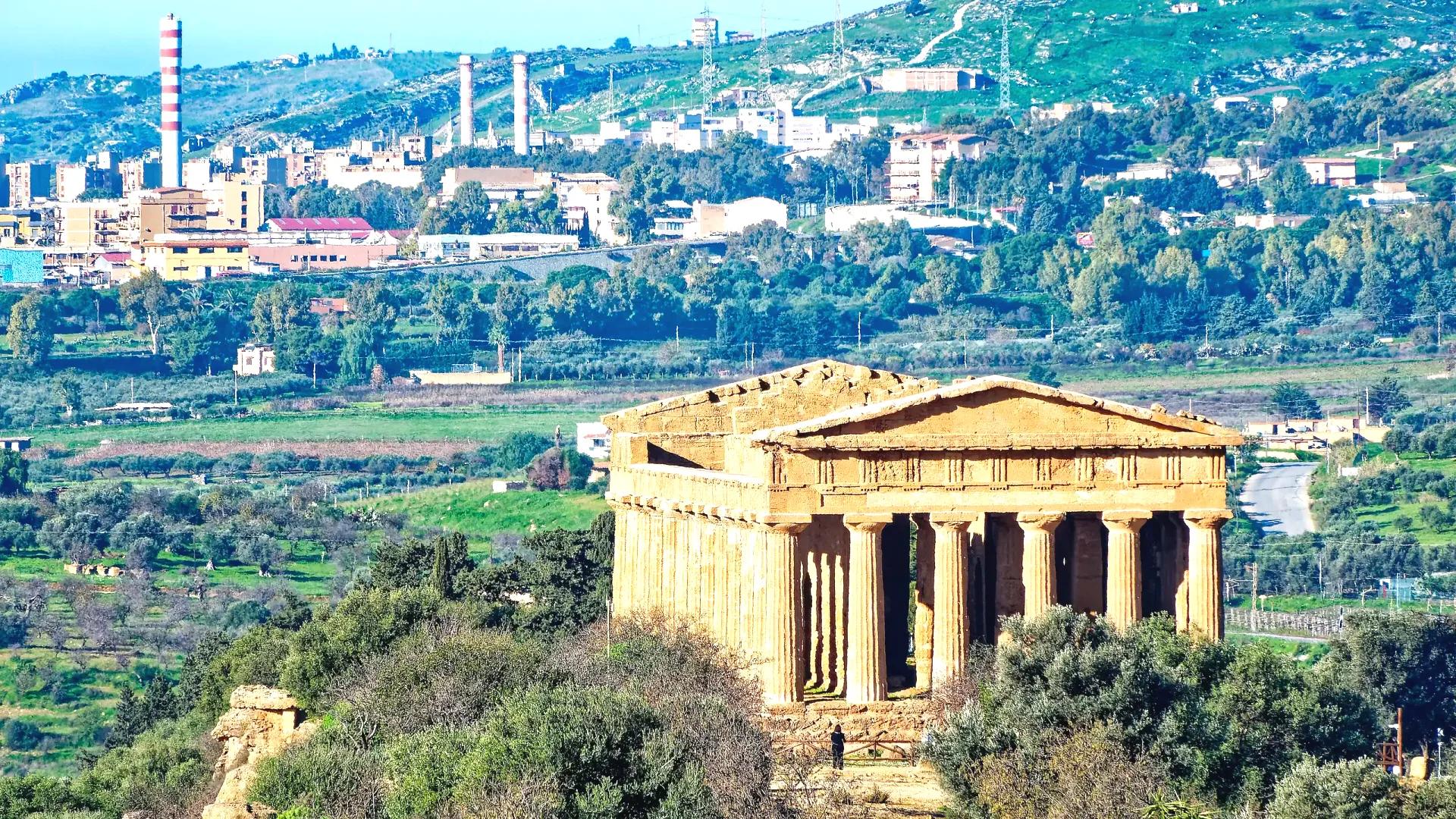
There are two Valleys of the Temples. The daytime one is a great archaeological site: golden Doric colonnades on a ridge above the sea, walked in strong light with a hat and a water bottle. The evening one is something closer to theatre. The coaches leave, the heat lifts off the limestone, the sun drops into the sea beyond the Temple of Castor and Pollux, and then the floodlights come up and the temples burn amber against a violet sky. In summer, the park formally embraces this second life with a season of night openings that keeps the gates open for hours after sunset. This guide covers how the 2026 evening season works, how to time sunset among the temples, what the heat actually demands of a daytime visitor, and how to build the museum and the Kolymbethra Garden around the cool ends of the day.
Why evening is the connoisseur's visit
The case for the evening starts with subtraction. The afternoon heat is gone — on the exposed crest of the ridge, where shade is nearly nonexistent, this changes the character of the walk entirely. The day-trip coaches are gone, having swept through at the hottest, most crowded hours. What remains is the site itself, at walking temperature, in the best light of the day, shared with a fraction of the daytime numbers. The temples were built to be seen from a distance and in profile; an emptier ridge at dusk gives you exactly that.
The evening also delivers two distinct spectacles in sequence. First comes the sunset hour, when the temples' calcarenite runs through its full range — honey, gold, amber, rose — and the low western light rakes the column flutes into deep relief. Then, as the colour drains from the sky, the floodlights take over, and the illuminated colonnades hang against the darkening ridge. The Temple of Concordia and the Temple of Juno, on their high points at the eastern end, are the stars of this second act; the transition twenty minutes either side of full dark is the most photographed sequence in Sicilian archaeology.
It is worth knowing that the illumination itself is not seasonal: the temples are floodlit at dusk throughout the year, and the sight of the lit ridge from the town above or the road below is one of Agrigento's permanent pleasures. What is seasonal is being inside the park after dark. Outside the summer season the site closes in the early evening, and the floodlit temples are admired from outside the fence; during the night-opening season you walk among them.
How the 2026 night season works
For 2026 the park announced night openings from 20 June to 20 September. During that window the site runs continuously from the 08:30 morning opening deep into the night: on weekdays, entry until 22:00 with the site clearing by 23:00; on weekends and holidays, entry until 23:00 with exit by midnight. Outside the summer season the standard daytime pattern applies — gates open at 08:30, last daytime entry at 19:00, everyone out by 20:00. As always with living institutions, confirm the current day's hours before you build an evening around them; schedules shift at the season's edges.
Evening entry is ticketed like any other admission, and the after-dark hours have become a small ecosystem of their own. Guided sunset and night tours operate in English, meeting at the Temple of Juno entrance and walking the ridge through the transition from daylight to floodlight; independent visitors are equally free to simply enter in the evening and walk at their own pace. If you want the guided version in high summer, book ahead — the sunset slots are the first to fill.
One calendar quirk deserves a flag. On the first Sunday of each month the park's daytime hours are free-admission, and in summer 2026 those dates fall on 5 July, 2 August and 6 September, with free entry running to 19:00 before the ticketed evening session resumes. Free Sundays are wonderful and correspondingly crowded; if your only evening in Agrigento happens to be one of them, expect a busier ridge in the sunset hour, and consider the quieter late slot instead.
Sunset timing among the temples
Arrive ninety minutes before sunset. That is the rule that makes the whole evening work: it gives you time to walk to your chosen vantage point without hurrying, watch the light build through its warmest phase, and still be in position for the drop. In Agrigento, sunset falls around 20:30 at midsummer and pulls back toward 19:00 by late September, so a night-season evening visit typically means entering between 18:30 and 19:30 depending on the month. Check the exact time for your date; on a west-facing ridge, twenty minutes is the difference between the show and the aftermath.
Where to stand is a matter of taste, but three positions have earned their reputations. The terrace of the Temple of Juno, at the highest eastern point, gives you the entire ridge and the sea in one sweep — the classic wide shot, and the natural place to end an eastward evening walk. The western front of the Temple of Concordia takes the last light full on the colonnade, the single most reliable image of the evening. And the stretch of the Via Sacra between Concordia and Hercules lets you shoot the lit temples in both directions as the floodlights come up. If you can only choose one, choose Juno for drama, Concordia for architecture.
Plan the after-dark leg before it goes dark. Decide which gate you will leave by, remember the exit times — 23:00 on weekdays, midnight on weekends in the 2026 season — and note that the walk back to either gate is longer at night than it feels in daylight. The temples themselves are brilliantly floodlit, but the stretches of path between them are dimmer, and the surface is uneven limestone gravel; a phone torch covers the gaps comfortably. None of this is a warning against the night visit — it is the best thing the park does — merely the difference between an evening that ends well and one that ends with a hurried kilometre in the dark.
Heat strategy for the daytime hours
If you are visiting between June and September, take the heat seriously as a planning input, not an inconvenience. The ridge is exposed for its whole length, the stone and gravel radiate the afternoon back at you, and shade between the major temples is scarce to nonexistent. July and August afternoons regularly reach the mid-thirties. The professionals' pattern is a split day: walk the ridge in the first two hours after the 08:30 opening, be off it by late morning, spend the hot middle of the day indoors, and return — to the ridge or to the coast — for the evening.
The midday refuge is not a compromise; it is where some of the best of Agrigento lives. The Pietro Griffo archaeological museum, a short distance up the hill from the temples, is open daily 09:00 to 19:00, air-conditioned, and holds the reassembled Telamon giant and the finest Greek collection in southern Sicily — ninety minutes gone in a blink. A long Sicilian lunch in the historic centre covers another hour or two. By 17:00 the light is softening, the ridge has cooled, and the evening act can begin. Fighting the Sicilian afternoon head-on is the one mistake the heat never forgives.
Water is the other non-negotiable. Carry at least a litre per person for the ridge walk, more with children; the café by the Arcosolia stretch, near the Temple of Concordia, is the reliable mid-route stop for refills and shade. Add a real hat, sunglasses and high-factor sunscreen — the classical world provided no awnings — and wear closed, comfortable shoes: the Via Sacra is compacted limestone with loose gravel, and the temple platforms are worn stone. Sturdy trainers outperform sandals everywhere on this site, in daylight and even more so after dark.
Building the perfect summer day around the evening
Sequenced well, a single summer day in Agrigento becomes two visits for the price of one itinerary. Morning: enter at Porta Giunone at 08:30 and walk the ridge east to west while it is cool, giving the Concordia and the Olympieion their unhurried due. Midday: museum, then lunch and a siesta in the historic centre. Late afternoon: the Kolymbethra Garden — the FAI-managed citrus hollow in the fold of the valley below the Temple of Castor and Pollux, open 10:00 to 20:00 in July, August and September (shorter hours the rest of the year, last entry half an hour before closing), with its own small admission alongside the park ticket. Evening: back onto the ridge for sunset and the floodlights.
The Kolymbethra deserves its slot in this plan rather than a footnote. It is the sensory opposite of the ridge above it: shaded, irrigated, fragrant with citrus, threaded with paths among olives and myrtle, on ground that has been cultivated more or less continuously since a great pool was dug here to water the Greek city in the fifth century BCE. In the furnace of a summer afternoon it is the coolest place inside the park boundary, and it re-sets you completely for the evening walk. On some summer nights the FAI's evening events open the garden after hours as well — worth checking for your dates.
Two practical notes complete the picture. Combined tickets covering the park together with the museum or the Kolymbethra exist, so decide your full day before you reach the ticket window rather than at it — or have the whole sequence arranged in advance, which is precisely the sort of choreography a concierge service is for. And if your dates fall outside the night season, do not write off the evening: the temples are floodlit at dusk all year, the view of the lit ridge from the town's belvederes is free of charge and effort, and a table on a terrace above the valley delivers a respectable second act to any winter visit.
Frequently asked
Is the Valley of the Temples open at night?
Seasonally. In 2026 the park announced night openings from 20 June to 20 September: entry until 22:00 on weekdays (site clears by 23:00) and until 23:00 on weekends and holidays (exit by midnight). Outside that season, daytime entry runs to 19:00 with the park closing at 20:00.
What time is sunset at the Valley of the Temples?
Around 20:30 at midsummer, pulling back toward 19:00 by late September. Arrive about ninety minutes beforehand to walk to your vantage point and watch the light build; the Temple of Juno terrace and the western front of the Concordia are the classic positions.
Are the temples illuminated every night?
Yes — the temples are floodlit at dusk year-round. What changes seasonally is access: only during the summer night season can you walk among the lit temples inside the park. The rest of the year the illuminated ridge is admired from the town and the roads outside.
Do I need a torch for a night visit?
The temples and main areas are floodlit, but the stretches of path between them are dimmer and the gravel surface is uneven, so a phone torch is genuinely useful for the walk between monuments and back to the gate.
How hot does it get during the day in summer?
July and August afternoons regularly reach the mid-thirties, and the ridge offers almost no shade. Walk it early (from 08:30) or in the evening, keep the middle of the day for the air-conditioned museum and a long lunch, and carry at least a litre of water per person.
Is an evening visit good with children?
Often better than a daytime one in summer: the temperature is humane, the floodlit temples are genuinely dramatic for kids, and the crowds are lighter. Keep children close on the darker stretches of path — the ground is uneven — and note the exit times for your date.